
Why French Renault Tractors Have Collector’s Value
When people talk about historic tractors, many collectors immediately think of Lanz Bulldog, Deutz, or Fendt. These brands have dominated the scene in Germany for decades. But if you look beyond the border to France, you’ll discover a fascinating world of tractors that have also achieved cult status – above all, Renault tractors. What once served as robust workhorses in the fields is now becoming highly sought-after collector’s items. But why do French tractors, particularly those from Renault, have such high collector’s value?
In this article, we explore the history, technology, unique features, and today’s collector scene.
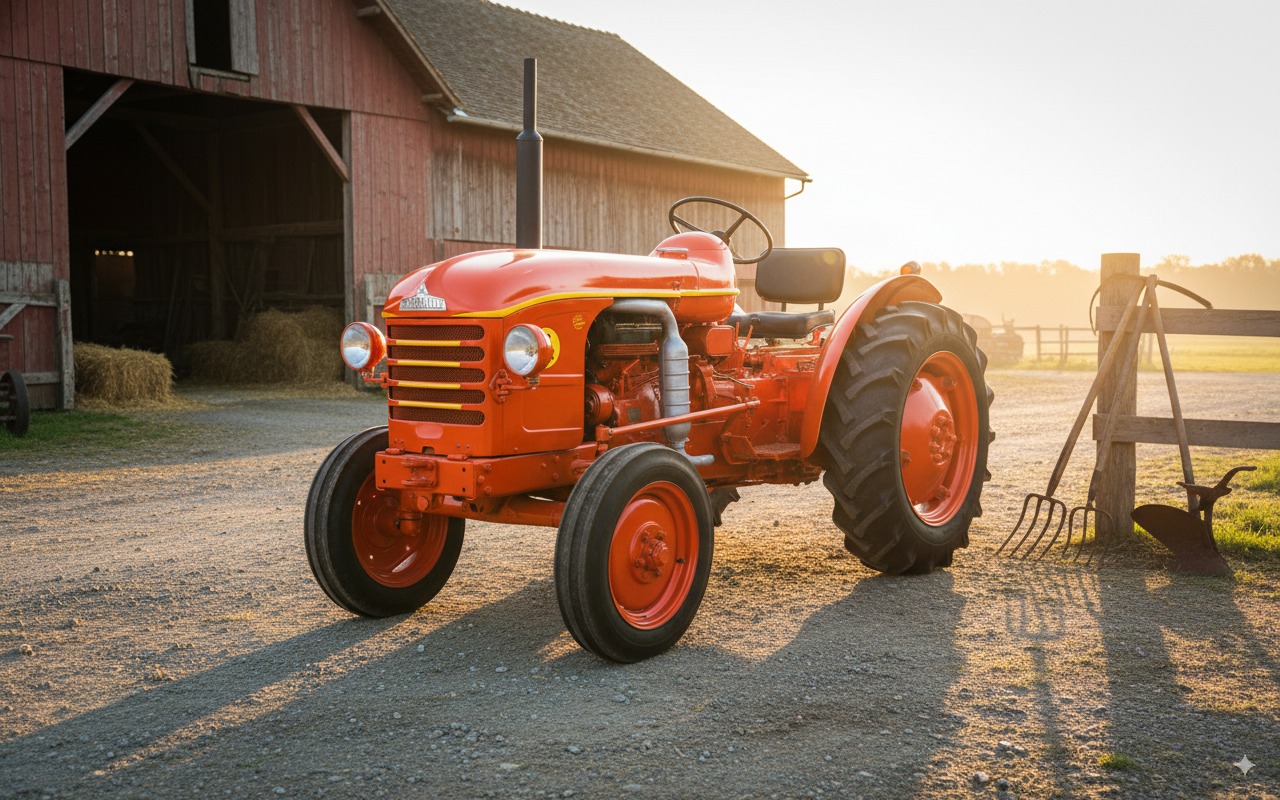
1. A Look at the History of Renault Tractors
The Renault brand is primarily known for automobiles. However, the company recognized the potential in the agricultural sector early on. As early as 1918, shortly after the end of World War I, Renault began producing tractors. The background was the enormous demand for agricultural mechanization, as many workers were missing and productivity needed to be increased.
Particularly interesting: Renault used its experience from vehicle and engine manufacturing and brought this know-how into tractor construction. This resulted in machines that differed significantly from German competitors in both technology and design.
The 1930s and 1940s were marked by continuous development. Renault increasingly relied on diesel engines and compact, versatile tractors that were also attractive for smaller farms. After World War II, demand skyrocketed as France had to modernize large parts of its agriculture. Renault was one of the largest suppliers in the country at that time.
2. Typical Features of French Tractors
French tractors like those from Renault differ from German brands in several ways. These differences contribute significantly to their collector’s value today:
- Distinctive Design: While German tractors often appeared very functional and angular, French manufacturers like Renault opted for softer lines and a sometimes almost elegant design.
- Engine Technology: Renault developed its own diesel engines early on, known for their reliability and fuel efficiency.
- Comfort and Operation: As early as the 1950s, Renault experimented with more ergonomic seating positions and more accessible controls.
- Technical Innovations: Some Renault models were already equipped very early with synchronized transmissions and improved hydraulics – at a time when some German brands were still building conservatively.
These distinctive features have led to Renault tractors being perceived as “different” and “special” in collector circles.
3. Models with Cult Status
There are several Renault models that are particularly sought after today:
- Renault D 22 (1956–1961)
A compact tractor with about 22 HP, ideal for smaller farms. Today it’s a genuine entry-level model for collectors, as it’s still relatively affordable. - Renault N 70 (1960s)
A more powerful tractor that was often used for heavier field work. Its sturdy appearance and robust technology make it highly desirable today. - Renault Super 5 and Super 7
These 1960s models are true classics. The Super 7 in particular, with its nearly 40 HP, is considered versatile and reliable – a favorite among vintage tractor enthusiasts. - Renault 56 and 86 (1970s)
With more angular aesthetics and more modern technology, these tractors represent the transition into the era when Renault eventually collaborated with Fiat.
The rarer the surviving examples, the more the collector’s value increases. Particularly original machines in good condition are almost impossible to find anymore.
4. Why Renault Has Collector’s Value Today
There are several reasons why French tractors from Renault are highly valued today:
4.1. Rarity in Germany
While Lanz Bulldog, Deutz, or Fendt can be seen at almost every tractor meet, Renault tractors are a rarity in Germany. That’s exactly what makes them exciting for collectors.
4.2. Distinctive Technology and Design
The unique engine and vehicle technology sets Renault apart from other manufacturers. Collectors love machines that “not everyone has.”
4.3. French Charm
The combination of technical reliability and a certain “French esprit” in the design ensures that Renault tractors stand out.
4.4. International Networking
Through the later collaboration with Fiat and the subsequent integration into the Claas group (regarding tractors), Renault also gains significance in agricultural technology history. Collectors see Renault as part of a larger European development.
4.5. Value for Money
Just a few years ago, Renault tractors could be acquired relatively cheaply. Since then, prices have risen sharply as collectors have recognized how rare they are. Those who invested early can now enjoy significant appreciation in value.
5. The Collector Scene Today
In France, there is a vibrant Renault vintage tractor community. Clubs organize meets, restoration support, and spare parts exchanges. Interest is also growing in Germany.
At vintage tractor meets, French tractors regularly draw curious looks. Many visitors don’t even know these machines and are surprised at how modern some Renault models appeared for their time.
On online auction platforms and vintage vehicle exchanges, prices for restored Renault tractors are noticeably rising. While simple models like the D 22 could still be purchased for under 3,000 euros a few years ago, restored examples now quickly reach 8,000 to 12,000 euros – and the trend is upward.
6. Restoration and Spare Parts
A frequently mentioned challenge with French tractors is the spare parts situation. While you can get almost any part reproduced for Lanz or Deutz, the search for Renault parts is often more difficult. Nevertheless, specialists in France offer spare parts, and some German dealers have also specialized in Renault.
Many collectors see this as part of the appeal: the restoration is a challenge that requires creativity and perseverance. In the end, you have a tractor that turns heads at every meet.
7. Value Development and Future Outlook
The trend is clear: French tractors are continuing to gain importance. While the market for German classics is already well-explored, collectors are increasingly discovering French brands.
Renault holds a special position because the brand has a long history, a high production volume (especially in France), and a good technical standard. For the future, it can be expected that prices for well-preserved Renault models will continue to rise.
Younger collectors in particular, who are looking for more affordable entry-level models, like to choose Renault. This means the fan base is continuously growing.
Conclusion: Renault Tractors as a Hidden Gem with Collector’s Value
French tractors, particularly those from Renault, are much more than just exotic curiosities at vintage tractor meets. They are distinctive, technically interesting, and historically significant vehicles that embody the charm of an entire era.
Their rarity in Germany, their technical distinctiveness, and the growing demand make them genuine collector’s items. Anyone who owns a Renault tractor today can count themselves lucky – and those who don’t have one yet shouldn’t wait too long. Because the value trend shows: the French Bulldog has long had the potential to compete with the big German names.