
Reading the Symptoms Correctly: Checking the Injection Pump
Your tractor talks to you – you just need to learn to listen. So before you pick up any tools, it’s time to observe. When you want to check your injection pump, watch for the typical signals. The most obvious is the smoke from the exhaust. Black smoke? That means too much unburned diesel. The cause could be an incorrectly adjusted delivery volume, but often it’s just dirty nozzles or a clogged air filter. Blue smoke indicates burning engine oil. This can come from worn piston rings, but with pumps that have their own oil supply, it can also indicate leaking seals within the pump, allowing engine oil into the fuel circuit. White or gray smoke, especially during cold starts, can indicate air in the system or incorrect injection timing. Also listen to the engine. Rough idling, sudden power loss under load, or a hard, knocking noise are clear indicators that something is wrong with the fuel supply. Note these observations – they are the first and most important step toward diagnosis.
The Lifeline of the Vintage Diesel Engine: Understanding the Function
To understand why maintenance is so important, let’s take a brief look inside. The heart of every in-line injection pump is the pump elements, one for each cylinder. Imagine a small piston driven by a camshaft inside a cylinder. This piston builds up the enormous pressure of several hundred bar needed to finely atomize the diesel through the nozzles. The amount of fuel delivered is controlled by rotating the pump plungers via a control rack. This control rack is connected to the throttle linkage and the centrifugal governor, which keeps the engine speed stable. This entire mechanism in a vintage diesel engine is a marvel of precision engineering and demands two things: absolutely clean fuel and perfect lubrication. Even the tiniest dirt particles can damage the highly precise pump elements. Water in the diesel leads to corrosion and destroys lubricity. That’s why regular fuel filter changes are absolutely the most important maintenance task of all. Many pumps also have their own oil supply that must be regularly checked and changed.
Typical Quirks of the Bosch In-Line Injection Pump and What You Can Do
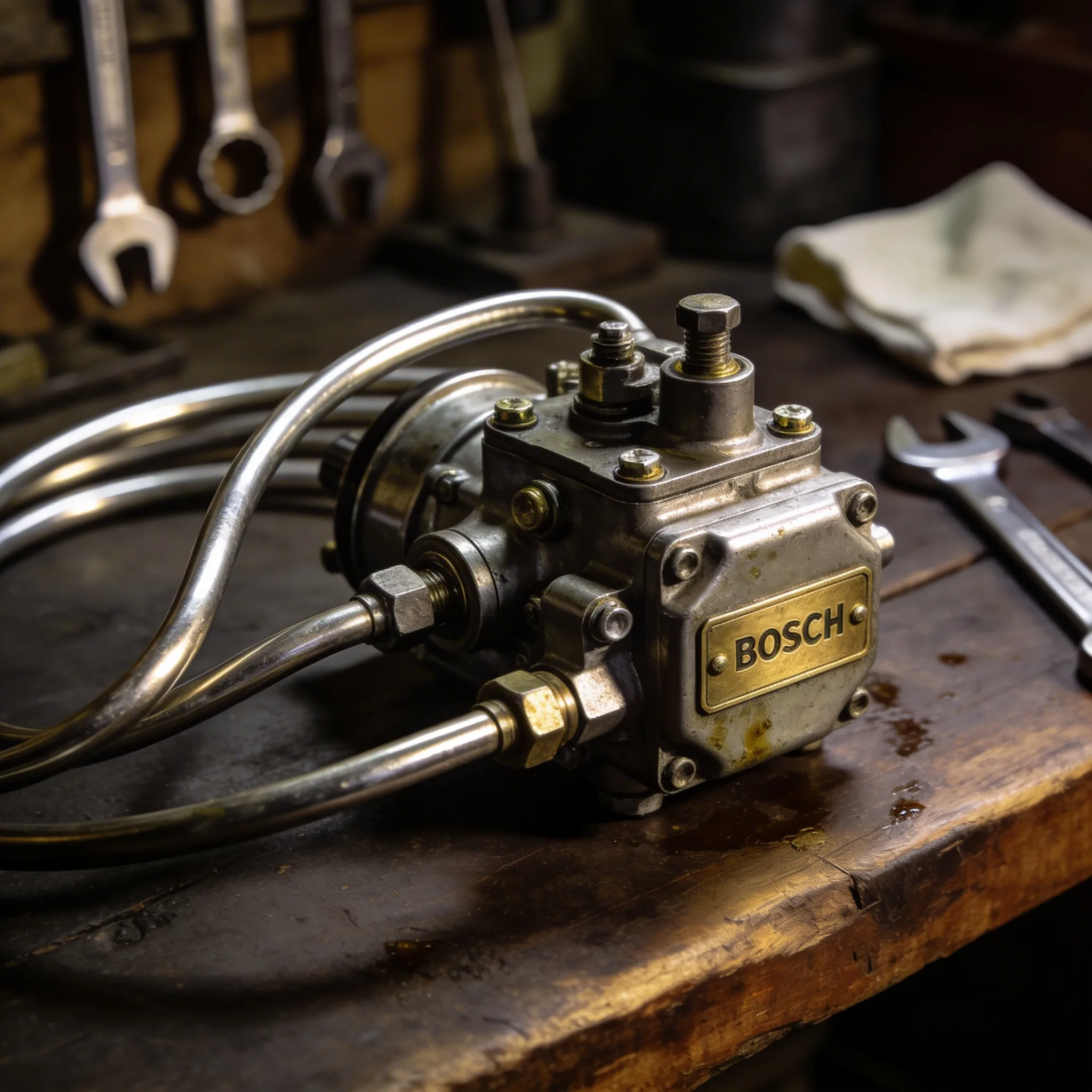
In many of our old treasures, from Fendt to Deutz to MAN, a Bosch in-line injection pump faithfully does its duty. These pumps are legendary for their longevity, but they too have their peculiarities. A classic is oil dilution. When the pump element seals deteriorate over time, diesel fuel can seep into the pump’s oil chamber. The oil becomes thinner and loses its lubricating properties. Therefore, regularly check the oil level at the inspection screw. If a thin, diesel-smelling liquid comes out, it’s high time for an oil change and a closer inspection. Another topic is the governor. If the engine “hunts” at idle – meaning the RPM fluctuates – or responds poorly to throttle input, it could be a varnished or stiff governor. Sometimes just an oil change with fresh engine oil helps here. Important: Follow the specifications in your tractor’s workshop manual meticulously. It states exactly which oil in what quantity goes into the pump and how the change should be performed.
Your Tractor Won’t Start? Properly Maintaining and Bleeding the Injection Pump
The most frustrating problem: Your tractor won’t start properly. You crank forever, and only a white cloud comes out. In nine out of ten cases, it’s simply air in the fuel system that’s the culprit. This often happens after changing the fuel filter or when the tank has run dry. Proper bleeding is the key to success here and a core aspect when we talk about injection pump maintenance. The procedure is usually similar: First, open the bleed screw on the fuel filter and pump with the hand pump until bubble-free diesel emerges. Tighten the screw. Then do the same at the bleed screw directly on the injection pump. The last and most important step: Loosen the union nuts of the injection lines directly at the nozzles by one or two turns. Now start the engine. It will take a moment, but as soon as diesel emerges from the loosened lines, tighten them one after another. The engine should then fire up. For such work, a good workshop manual and the right gaskets are worth their weight in gold. This ensures everything is properly sealed again.
Frequently Asked Questions About Injection Pump Maintenance
Which oil goes in the injection pump?
In most cases, the injection pump takes the same engine oil as your tractor’s engine. However, be sure to check the workshop manual, as there can be exceptions. It’s important to follow the fill quantity exactly. Usually there’s an inspection screw and a drain screw. Fill only up to the bottom edge of the inspection bore.
Can I overhaul the injection pump myself?
Basic maintenance like oil changes and bleeding can be done by an experienced mechanic. However, a complete overhaul or calibration on a test bench is specialist work. This requires expensive specialty tools, test benches, and extensive expertise about delivery volumes and timing.
My tractor smokes black, is the injection pump broken?
Not necessarily. Black smoke means unburned fuel. Before suspecting the pump, check the simple things: Is the air filter clean? Are the injectors working properly or are they dripping? Is the injection timing correctly set? Often the cause lies here and not in a defective pump itself.
Conclusion
The injection pump is a robust piece of technology that needs care. Regular checks, clean filters, and fresh oil are the best insurance against expensive damage. Many problems that look dramatic at first glance can be fixed with a systematic approach and some basic knowledge. Don’t be afraid to perform basic injection pump maintenance yourself. Your tractor will thank you with reliability. What are your golden rules when maintaining the injection pump?