
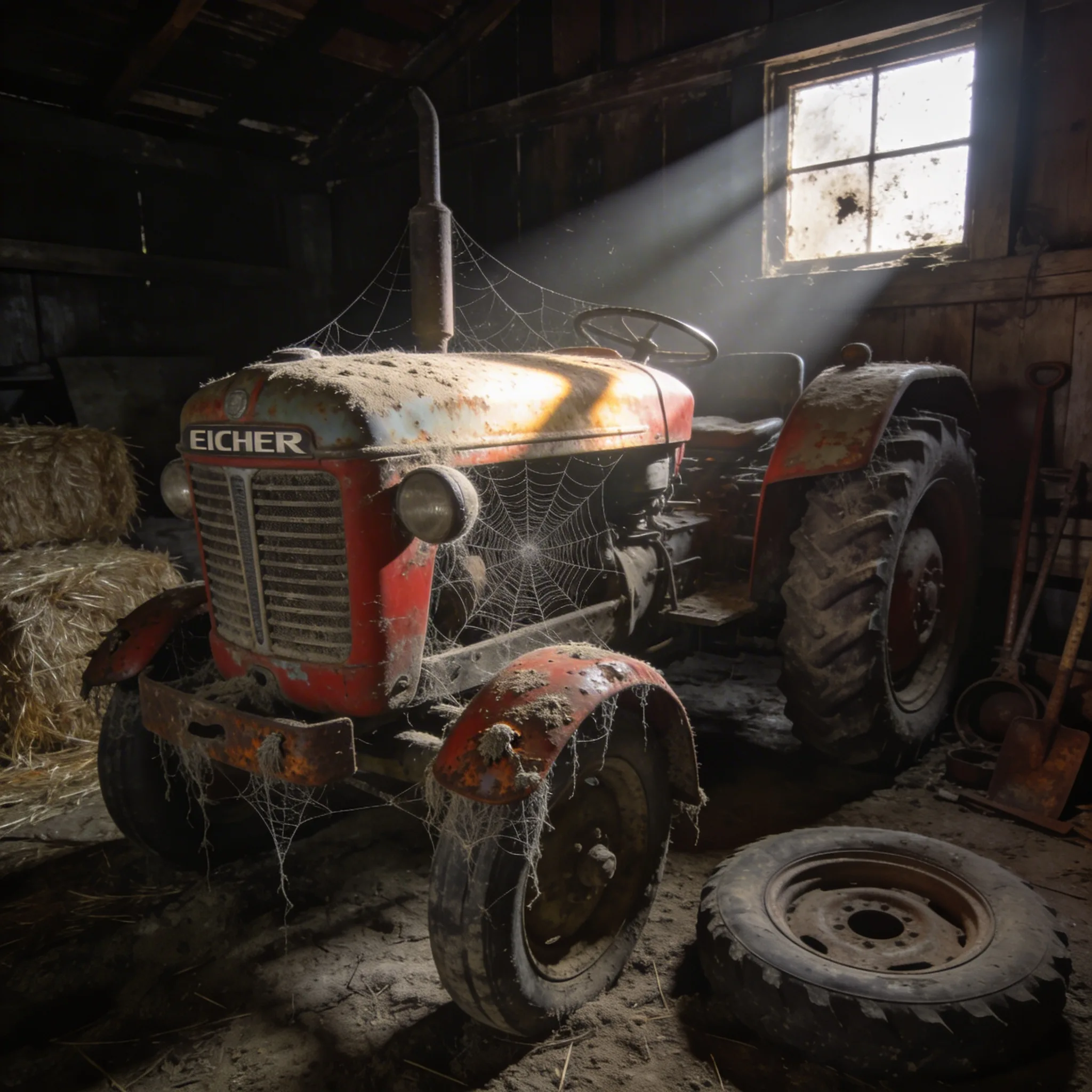
The Recovery – How to Get Your Barn Find Tractor Home Safely
The first step is often the trickiest: recovering the old tractor. Before you even pick up a wrench, clarify the ownership situation. A handshake is nice, a written purchase agreement is better – even if it’s only for a symbolic euro. This will save you a lot of trouble later. Are papers available? Perfect! If not, it’s not the end of the world, but the path to re-registration will be rockier. Prepare for transport. The tires are guaranteed to be done after decades of standing still. Bring a strong compressor and patch kit, but expect the old tires to crack. Better yet are some suitable used wheels or sturdy supports to maneuver the tractor onto a trailer. Never rely on the brakes! Assume they’re seized or completely non-functional. Check whether the steering is free. A locked steering makes loading extremely difficult. For transport itself, you need a suitable low-loader or a robust trailer. Secure the tractor with at least four heavy ratchet straps, crossing them over. The old handbrake is not a reliable transport security.
The First Revival – What Your Vintage Machine Needs Now
Finally, the treasure is in your workshop. The biggest temptation now is to connect a battery and press the start button. Don’t do it! That’s the fastest way to permanently destroy an engine that might still be salvageable. Reviving a vintage tractor requires patience. First of all, drain all fluids: engine oil, coolant, diesel. Catch everything in clean containers and inspect it. Do you find water in the oil, metal chips, or thick sludge? These are important clues about the engine’s condition. The tank is certainly a rusty brew of old diesel and condensation water. It must be removed and thoroughly cleaned or even replaced. Replace all fuel lines and filters. Now to the heart of the matter: Try to turn the engine over by hand. Place a large wrench on the crankshaft bolt and try to move it slowly. Nothing happens? No force! Spray plenty of penetrating oil through the glow plug or injector openings directly into the cylinders. Give the oil time to work – days, sometimes even weeks. You can’t rush this step. Reviving your vintage tractor is a marathon, not a sprint.
The First Assessment – An Honest Tractor Initial Inspection
Now it’s about the substance. A thorough tractor initial inspection determines the further path and the scope of the project. Be brutally honest with yourself here. Take a clipboard and go through the tractor systematically from front to back. Note every defect. Check the engine block for visible cracks, especially frost damage is a common problem. What about the clutch? Often the clutch disc has baked onto the flywheel after long standing. This is solvable, but involves work. Shift through all gears. Does everything feel good or does it catch badly? Take a look at the hydraulics. Are the lines porous, the cylinders leaking, or the piston rods pitted? The electrics can usually be written off completely. Mouse damage and corroded contacts make a wiring harness renewal almost always unavoidable. Examine the frame, axles, and fenders meticulously for rust-through. Surface rust is patina, deep holes mean welding work.
From Find to Showpiece – Restoring a Barn Find Tractor
When the assessment is complete and you’ve decided to tackle the project, the real work begins. The most important thing to be able to restore a barn find is the exact identification of the model. Look for the type plate on the frame or engine block. Without this information, the spare parts search becomes a gamble. Once you know whether you have a Deutz, Fendt, Lanz Bulldog, or an exotic in front of you, the hunt begins. This is where we come in. In our shop, you’ll find nearly everything you need for the most common models – from parts lists to authentic stickers. An invaluable helper is the matching workshop manual. It tells you torque values, adjustment specifications, and the correct sequence for assembly. A good reproduction is worth its weight in gold. Always remember: A restoration is a journey. There will be setbacks, but the feeling when the engine runs for the first time again is priceless.
Frequently Asked Questions About Barn Find Tractors
What legal considerations should I be aware of with a barn find?
Clarify ownership with a written purchase agreement. If vehicle documents are missing, you’ll need a statutory declaration from the seller about their loss and must have a full inspection per traffic regulations carried out at TÜV to apply for new documents.
My barn find tractor has a seized engine. What should I do?
Never use force to free a seized engine. Remove the injectors or glow plugs and fill the cylinders with high-quality penetrating oil. Let the oil work for several days or even weeks, then carefully try to turn the engine over by hand at the crankshaft.
Where can I find the right spare parts for my old tractor?
The most important step is precisely identifying the model and year of manufacture via the type plate. With this data, specialized dealers like Eilbulldog can help you find the right parts – from engine components and filters to authentic stickers and workshop manuals for your project.
Conclusion
A barn find tractor is more than just old iron. It’s a promise, an adventure, and an incredibly rewarding project for anyone who isn’t afraid of oil and hard work. With proper planning, patience, and an honest assessment of the condition, a forgotten wreck can become a proud tractor again. The journey is the destination, and the indescribable feeling when the old diesel comes back to life after decades is worth every effort. Don’t be discouraged and take it step by step.