
When Your Tractor Engine Knocks: Interpreting the Hard Knock Correctly
A knocking or hammering from the engine is probably the sound that gives us all cold sweats. But not all knocking is the same. The most important question is: When and how does it knock? A deep, dull knocking that gets louder with rising engine speed and under load is a serious alarm signal. Here, the suspicion falls on bearing damage to the crankshaft or connecting rods. If you hear something like this, the rule is: Engine off immediately! Every further operation destroys more. A lighter, almost ticking knock that is mainly heard when the engine is cold and gets quieter or disappears at operating temperature often indicates piston slap. This is less dramatic but should still be monitored. A very fast, rhythmic ticking or clicking, on the other hand, often comes from the valve train. Here, the valve clearance may be too large, which can usually be adjusted quite easily. When your tractor engine knocks, a precise analysis is the first step to avoiding an expensive mistake.
Whistling, Squealing, Grinding: When Your Tractor Engine Makes Noises
Not every noise is a harbinger of engine death. Often it’s the accessories that cause unusual acoustics. A high-pitched whistling or whining whose frequency rises with engine speed often comes from a bearing. Typical suspects are the alternator, the water pump, or – if present – the turbocharger. A simple diagnostic trick: Briefly remove the drive belt. If the noise is gone, you’ve narrowed it down to the alternator or water pump. A loud, shrill squealing, especially when starting or during load changes, is almost always a too-loose or aged drive belt. This is quickly and cheaply fixed. It gets really serious with a grinding or scraping noise. This indicates metal rubbing against metal. Here you should shut off the engine immediately and get to the bottom of the cause. It could be a failing water pump bearing that’s coming apart, or something worse inside. When your tractor engine makes noises, proceed systematically and start with the simplest causes.
Systematic Vintage Tractor Engine Diagnosis
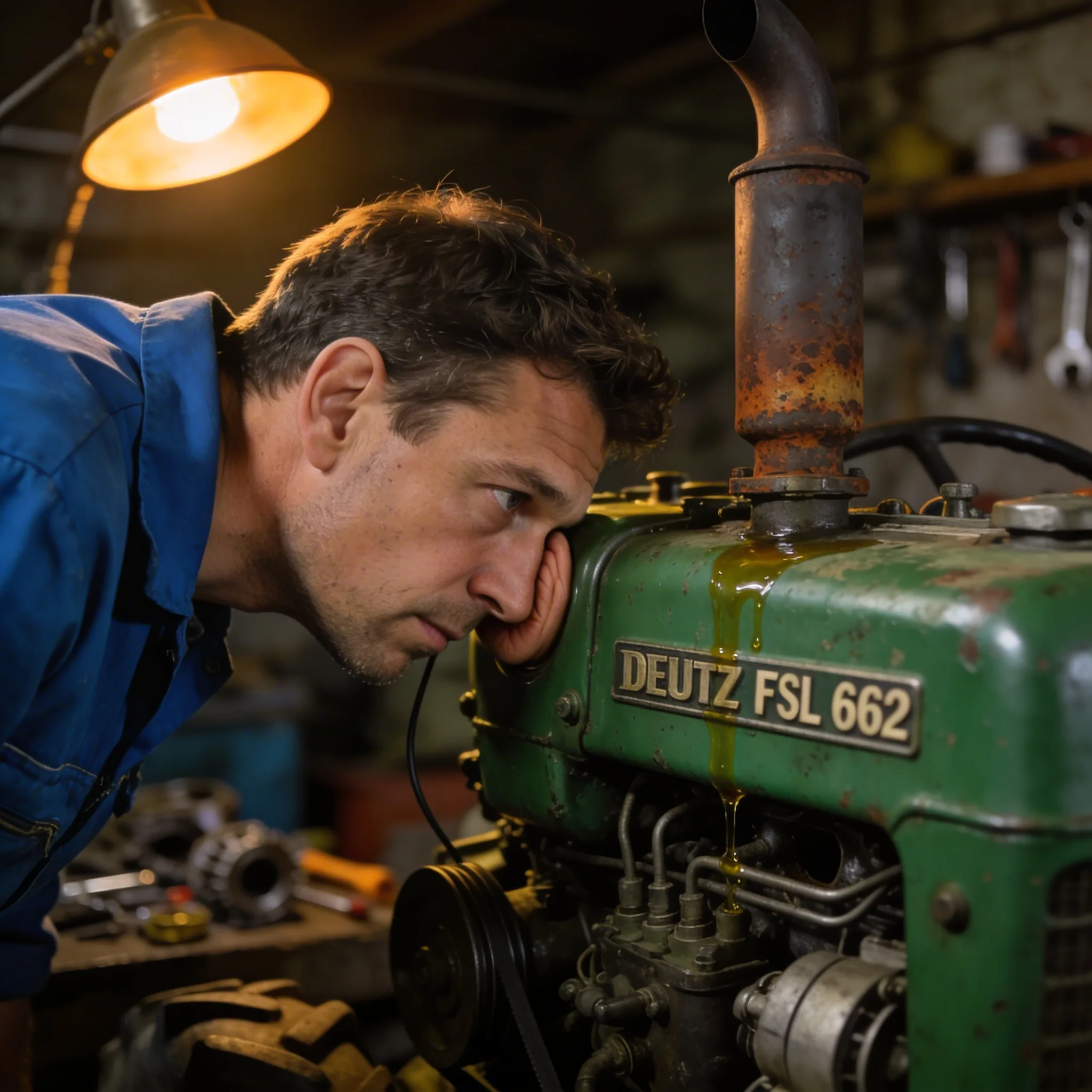
A good vintage tractor engine diagnosis doesn’t begin with disassembly but with listening. A fantastic tool for this is a long screwdriver. Place the metal tip at various points on the engine block (be careful with rotating parts!) and hold your ear to the handle. This way you can locate noises very precisely. Listen at the cylinder head, at the engine block at crankshaft height, and at the accessories like the alternator and water pump. Pay attention to how the noise changes: Does it get louder or quieter when the engine is warm? Does it change under load, i.e., when you’re driving or operating the hydraulics? Bearing damage typically gets louder under load. A look at the oil pressure is also mandatory. If it drops, that’s another indication of worn bearings. The most common mistake is frantically swapping parts out of panic. Stay calm, listen carefully, and narrow down the problem before you loosen a single bolt.
Common Engine Noise Causes and Finding the Right Parts
The list of engine noise causes is long but can often be narrowed down to typical suspects. Wear on drive belts and accessory bearings is common and relatively easy to fix. Valve train issues like excessive valve clearance are also a common cause of ticking. With diesel engines, hard knocking can also come from faulty injectors. The serious problems usually lie inside the engine: worn connecting rod or crankshaft bearings, piston slap, or broken piston rings. Once you’ve narrowed down the cause through careful engine noise interpretation, the search for the right spare parts begins. Especially with vintage machines, this is often a challenge. A good workshop manual is worth its weight in gold here to find the exact part numbers and specifications. In our shop, you’ll find not only the right spare parts but also the necessary literature and even the correct stickers for an authentic restoration.
Frequently Asked Questions About Interpreting Tractor Engine Noises
What does loud knocking during cold start that gets quieter mean?
Such a noise strongly indicates so-called piston slap. This means the piston has too much clearance in the cylinder when cold. When the engine warms up, the material expands and the noise disappears. It’s less critical than bearing damage but should be monitored.
My tractor squeals when starting, what could it be?
A loud squealing, especially when starting or during sudden load, is almost always caused by a worn or too-loose drive belt. Check the belt tension and its age. Often a simple belt replacement is already the solution to the problem.
How do I know which spare parts I need for my vintage engine?
The safest method is a look at the workshop manual or parts list for your tractor model. The type plate on the engine or chassis gives you the necessary information about model and year of manufacture. With this data, you can find the exactly matching parts from specialized dealers like Eilbulldog.
Conclusion
Your hearing is your best ally in the workshop. Instead of panicking at an unknown noise, use it as an opportunity to get to know your tractor even better. A systematic approach, from simple listening to localization with a screwdriver to checking operating conditions, almost always leads to the right diagnosis. Listen to your engine – it tells you exactly what it needs.