
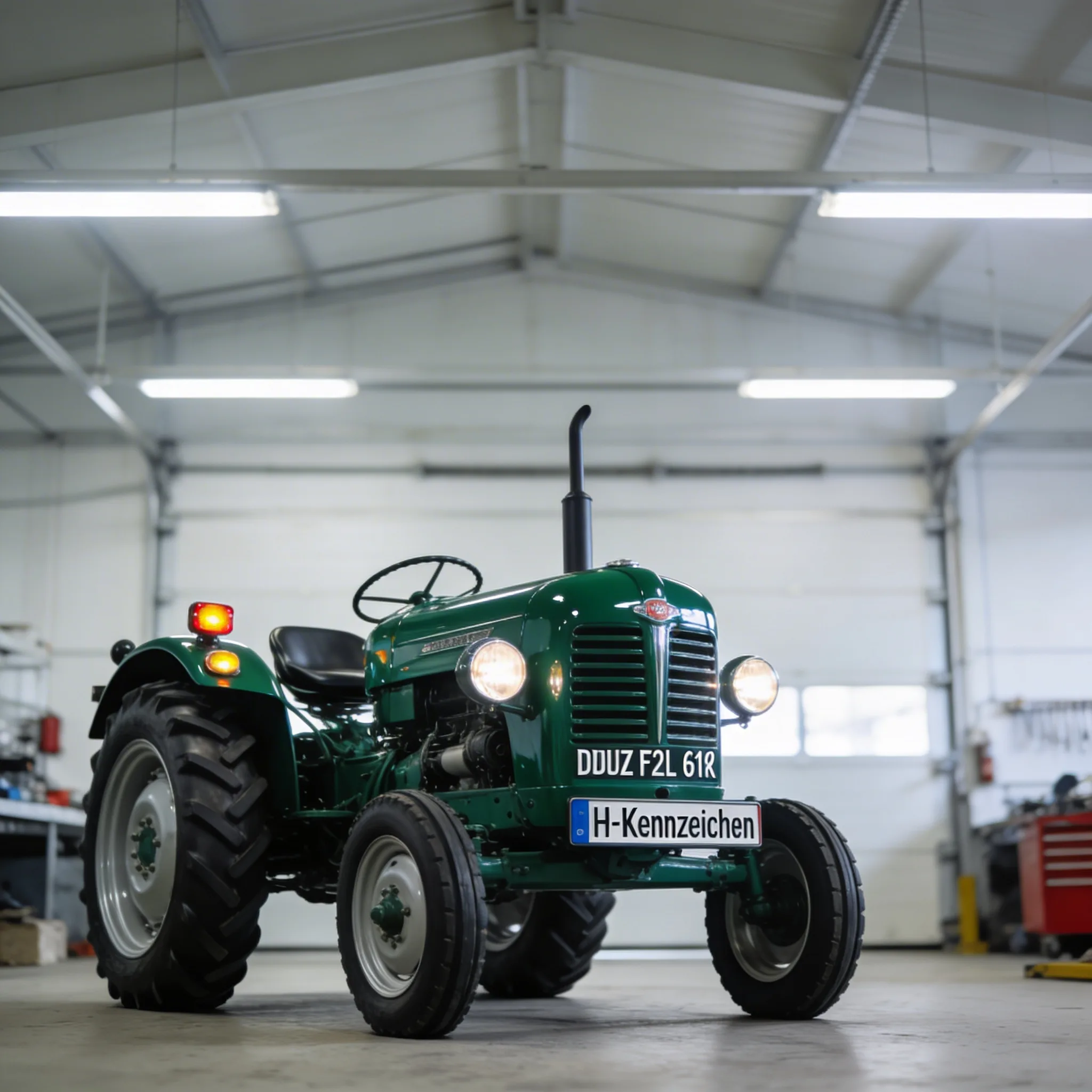
Historic Plates for Your Tractor: More Than Just Nostalgia
The H at the end of the license plate is more than just a letter. It’s a knighthood for you and your work. With historic plates, your tractor is officially recognized as an automotive cultural asset. This brings tangible benefits, such as a flat-rate, affordable vehicle tax and often cheaper insurance rates too. But the requirements are clearly defined. Your tractor must be at least 30 years old. The date of first registration is decisive here. Additionally, it must be in good, preservation-worthy, and above all largely original condition. Minor modifications are permitted, but only if they’re period-correct – meaning they were common and could have been done in the first ten years after initial registration. A modern radio installation is off-limits, but a roll-over bar retrofitted at the time may be acceptable. The most important criterion for the inspector is: Does the condition reflect the era? If you’re unsure which parts were original on your model, old brochures or authentic spare parts are a great orientation aid. This ensures your invested work is rewarded in the end.
The Checklist for the Vintage Tractor Inspection
The actual main inspection, often called the vintage tractor vehicle inspection, is the technical core of the whole procedure. It’s strictly about road safety here. Prepare well and go through your own checklist before driving to the inspector. This saves time, money, and nerves. Top of the list: the brakes. Do the service and parking brakes work properly and evenly? Are the lines tight? Next, the lighting: indicators, brake light, headlights – everything must work. Also pay attention to the correct bulbs and intact lenses. The steering must not have excessive play. Check all joints and tie rods. Another classic is the tires. Do they still have enough tread and are they free of cracks? Porous, old tires are an immediate knockout criterion. Also examine the frame and axles closely for cracks or severe corrosion. And very importantly: oil loss. An old tractor may sweat, but it shouldn’t drip! A clean machine always makes a better impression. If you’re unsure about certain repairs, check our guides for vintage tractors. Good preparation is half the battle.
When Papers Are Missing: Full Inspection Per §21 StVZO
Did you pull your treasure out of a barn without papers? Then you can’t avoid a so-called full inspection per §21 of the German Road Traffic Licensing Regulations (StVZO). It sounds worse than it is. During the full inspection, the testing engineer creates a completely new report, based on which the registration office issues new vehicle documents. The crux here is proving the technical data. How should the inspector know what maximum speed your 1965 Eicher had or what its permissible gross weight was? This is where you come in! Gather everything you can find in terms of documents: an old data sheet, a copy of an old registration document from an identical model, or ideally an original workshop manual. These documents are worth their weight in gold and enormously facilitate the inspector’s work. Without these records, it becomes difficult to impossible, as the inspector cannot confirm conformity with the regulations of that era. A common mistake is showing up for the inspection without any documentation.
The Vintage Vehicle Assessment: How to Convince the Inspector
Alongside the technical inspection, the assessment for classification as a historic vehicle per §23 StVZO takes place. This vintage vehicle assessment is the prerequisite for historic plates. Here, the expert checks not only the technology but above all the originality and preservation condition of your tractor. They look closely: Are the paint and labeling authentic? Do the attachments fit the era? Were only period-correct materials used? This is exactly where you can score with good preparation. A cleanly applied, authentic sticker set makes a huge difference. A reprinted but authentic manual in the cab shows you’ve engaged with the subject matter. When parts had to be replaced, it’s crucial that they correspond to the original.
Frequently Asked Questions About Vintage Tractor Vehicle Inspection
What do I do if my tractor has no papers at all?
In this case, a full inspection per §21 StVZO is required. Be sure to bring all available technical documents such as data sheets, old brochures, or workshop manuals to the inspection center. These documents are essential for the inspector to create a new report and thus the basis for new papers.
Are minor modifications or modernizations allowed for historic plates?
Modifications are only permitted if they’re period-correct. This means the modification must have been common and technically possible within the first ten years after the tractor’s initial registration. Modern attachments like LED lights or a digital radio are therefore generally excluded for historic registration.
Where can I find reliable technical data for my restoration?
The best source is original or authentically reprinted workshop manuals and parts lists. They contain all the important specifications you need for a correct restoration and also for the vehicle inspection. Such documents prove the originality of your tractor and your work to the inspector.
Conclusion
The path to historic plates isn’t rocket science – it’s primarily a matter of good preparation. When your tractor is technically sound and you can demonstrate its originality with the right parts and documents, even the vintage tractor inspection appointment becomes a mere formality. See it as the official recognition for the countless hours you’ve invested in your hobby. The first legal drive with historic plates on the back is worth every effort. Promise!
Have you had experiences with the vintage tractor vehicle inspection? Share them with us in the comments!