
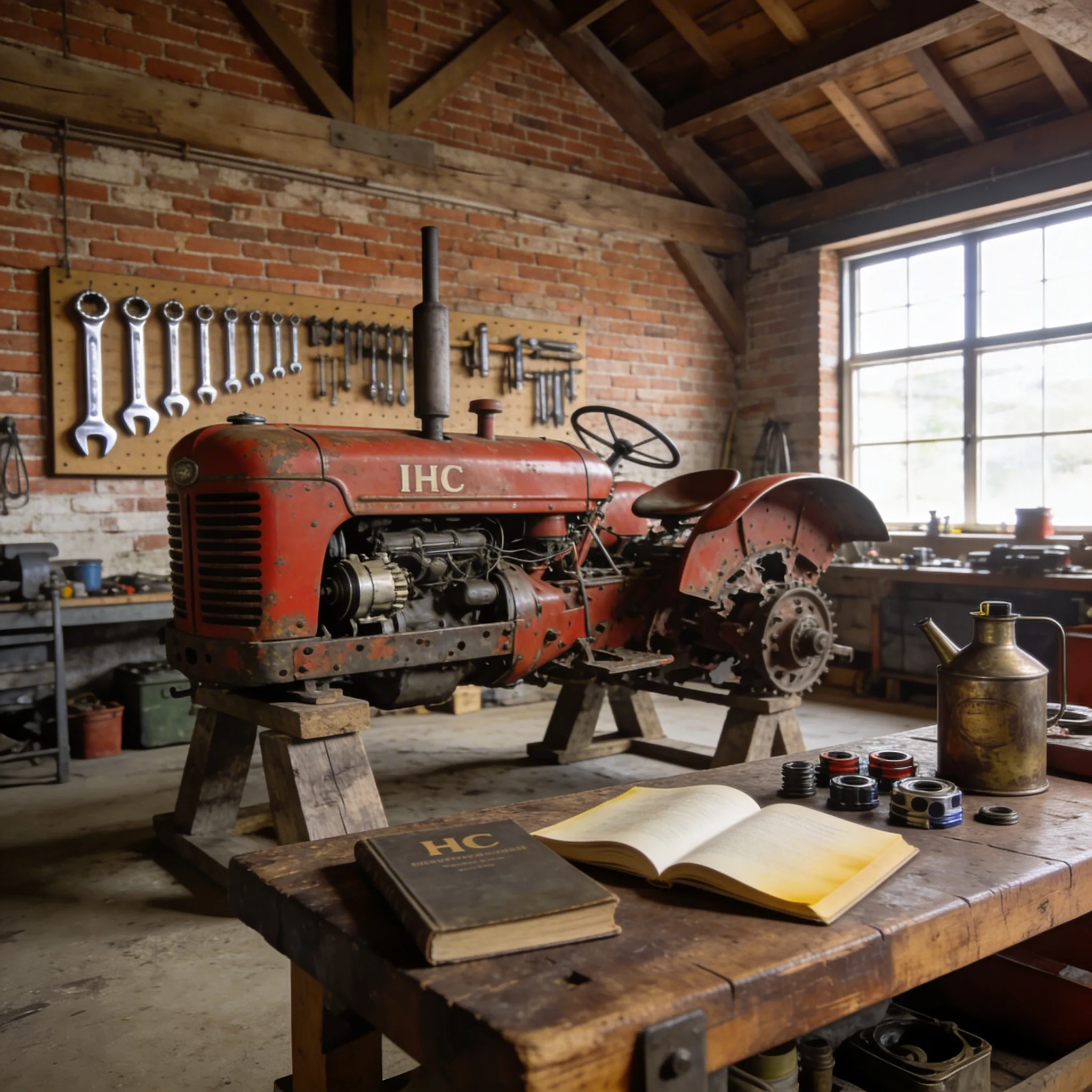
The Foundation: Planning Your Workshop Properly
Before the first wrench clatters, it’s time for the nitty-gritty: planning. The right location is crucial. An old barn or a spacious double garage is ideal. Aim for a ceiling height of at least three, preferably four meters. After all, you’ll want to remove a cab or lift out an engine with a crane without demolishing the roof. The floor is your foundation. Forget wooden planks or thin screed. You need a solid, reinforced concrete slab that easily supports the weight of a heavy tractor. Ideal is a smooth, sealed surface that’s easy to clean. Oil and diesel stains are part of the deal, but you don’t have to overdo it. Another point many underestimate: lighting and power. Plan more outlets than you think you’ll need – ideally including three-phase power for a welder or compressor. Bright, shadow-free illumination from multiple LED tubes on the ceiling and walls will save you a lot of cursing with a flashlight in your mouth later. When it comes to workshop planning: better to think it through once properly than to improvise for years afterward.
The Heart: The Right Vintage Tractor Tools
A workshop without proper tools is like a tractor without diesel. The old mechanic’s principle applies here: buy cheap, buy twice. Invest in quality from the start – it pays off. The foundation is a comprehensive socket wrench set in 1/4, 3/8, and 1/2 inch sizes. Add a set of good combination wrenches, ideally up to 32mm or larger – we’re not working on mopeds here. Essential for engine and transmission work is a torque wrench. Torque specifications are not suggestions – they’re mandatory! For those really stuck bolts on the axle or frame, you’ll learn to love a powerful impact wrench, whether pneumatic or battery-powered. A good selection of pliers, screwdrivers, and hammers (from a small ball-peen to a club hammer) is also part of the basic kit. When assembling your vintage tractor tools, also think about specialty tools like pullers for bearings or flywheels. It doesn’t all have to be there on day one, but a good basic kit is half the battle for a successful repair.
Order and Efficiency: The Perfect Workshop Setup for Your Tractor
Chaos is the mechanic’s greatest enemy. A well-thought-out workshop setup for your tractor saves not only nerves but also valuable time. The center of every workshop is the workbench. Choose a massive model with a sturdy worktop, preferably made of beechwood. This is where hammering, grinding, and assembling happens – nothing should wobble. A solid bench vise, firmly bolted to the top, is mandatory. For storing your tools, a tool cabinet with drawers is ideal. This way, everything is within reach and you don’t have to constantly search. Heavy shelving on the walls creates space for spare parts, oil cans, and machines. A common mistake is skimping on safety. Invest in high-quality axle stands with sufficient load capacity. Never, absolutely never, lie under a tractor supported only by a jack! An engine crane and a transmission jack are also worth their weight in gold when you need to move larger components alone.
Your Home Workshop for Tractors: Making Your Dream Setup Reality
The best equipment is useless without the right information and parts. Your home workshop for tractors only becomes truly complete when you know what you’re doing and what you’re working on. The most important thing besides tools is the matching workshop manual for your vintage machine. This contains the crucial data, torque values, and adjustment specifications. Without these instructions, any major repair is a risky gamble. And when you know which part you need, the big search often begins. A good workshop also has a well-stocked supply of common wear parts like gaskets, bolts, and filters. For everything else, you need a reliable partner. At the Eilbulldog Shop, you’ll find not only the right manuals but also authentic stickers for the finishing touch. With the right parts and the knowledge of how to install them, your project becomes a success.
Frequently Asked Questions About Setting Up a Tractor Workshop
How much space do I need for a tractor workshop?
For a functional workshop, you should plan at least the space of a double garage. Important is not only the floor area to work around the tractor but also a ceiling height of at least three meters. This gives you enough room for lifting work on the cab or engine.
What does the basic equipment for a mechanic’s workshop cost?
For a solid basic setup with quality hand tools, a sturdy workbench, and the most important safety equipment like axle stands, you should budget between 1,500 and 3,000 euros. Larger purchases like a welder or compressor come on top but can be added gradually.
Where can I find the right spare parts and instructions for my vintage machine?
Specialized online dealers like Eilbulldog are an excellent starting point for technical literature and workshop manuals. Additionally, exchange in forums and at vintage tractor meets is worth its weight in gold for benefiting from other mechanics’ experiences and tracking down rare parts.
Conclusion
The path to the perfect mechanic’s paradise is a project in itself, but one that’s worth it. Thoughtful planning, quality tools, and a tidy setup are the foundation for countless hours of successful wrenching. Your workshop will become your personal realm, a place where old technology is brought back to life. My most important advice: Take your time with setting up your tractor workshop and make no compromises on safety. What does your dream workshop paradise look like? Tell us about it in the comments!